
Setup Skew
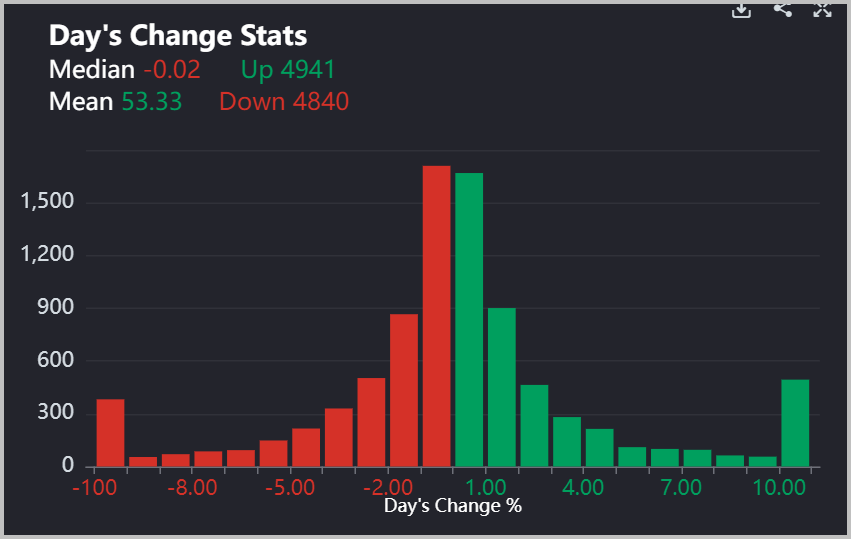
We have a 19.5% bearish setup skew for Friday’s trading. The bullish to bearish breakout favors bearish breakouts by 81%. The equal-weight market measure by RSP was down only -0.17% while the SPY was down -0.32%. And there were actually more advancers (4941) than decliners (4840) today.
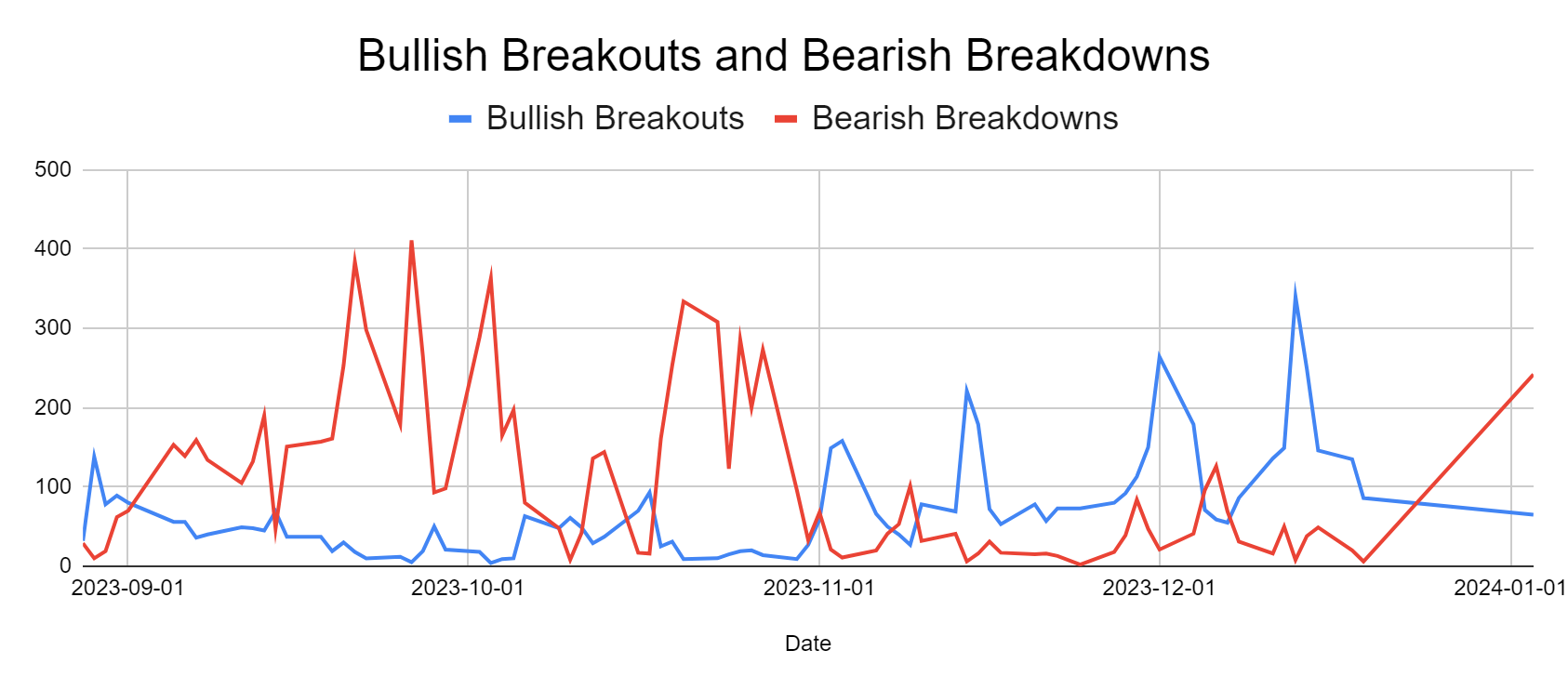
The chart below shows the bearish breakout skew (but note it’s more dramatic simply from having skipped 10 days at the end of DEC).
The big report—non-farm payrolls is out an hour prior to the market open tomorrow morning. More than the expected 168K jobs will likely be a downer for the market; fewer should be a catalyst.

In / Out of Favor Sectors
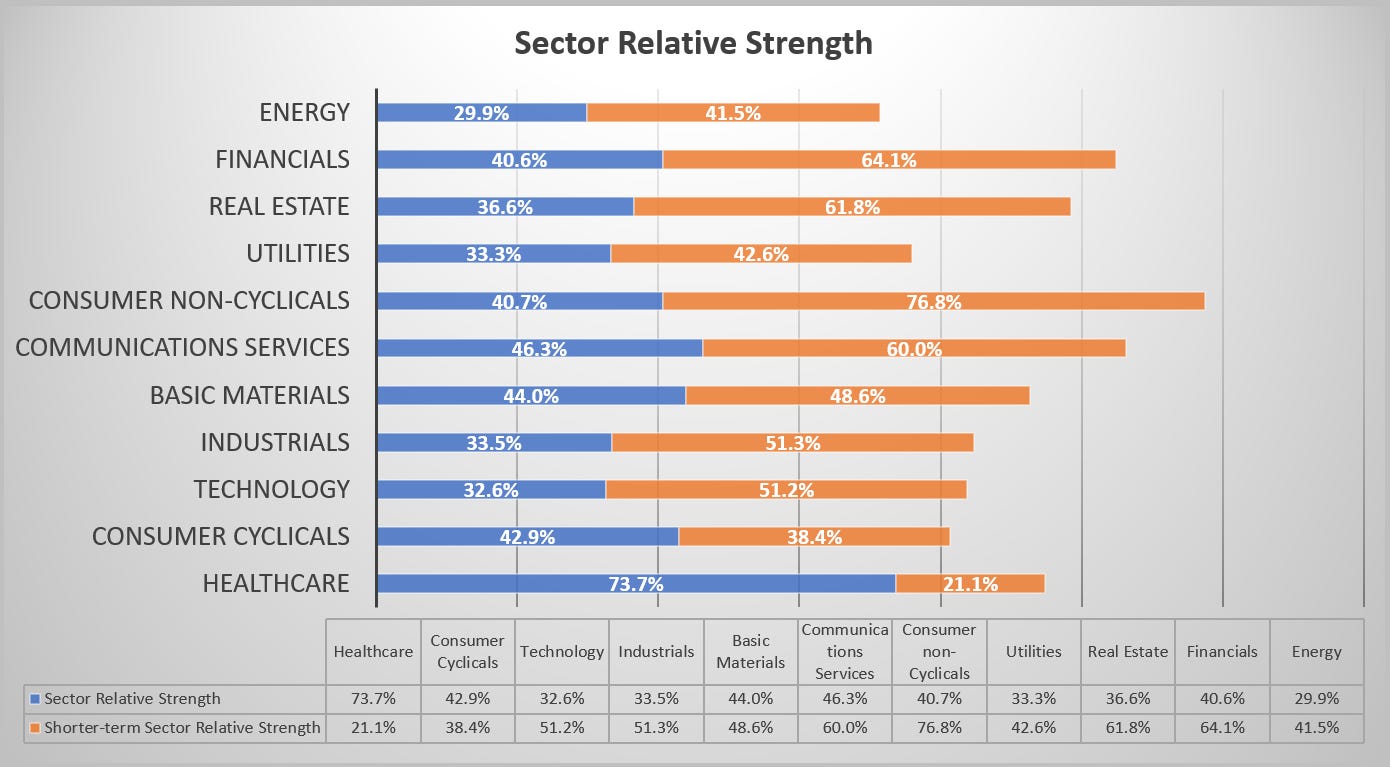
Consumer Non-cyclicals (XLP) Financials (XLF), and Communications Services (XLC) have the relative strength momentum right now.
Click here for link to Prospective Setups spreadsheet…

Debit Spread Prospective Trade
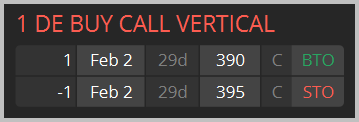
I’m considering a bull call debit spread in Deere (DE) similar to the structure below; I’d pay no more than $2.50 per spread and set a target profit of $4.85 when filled on the entry.
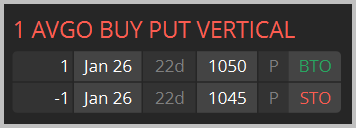
I’m considering a bear put debit spread in Broadcom (AVGO) similar to the structure below; I’d pay no more than $2.50 per spread and set a target profit of $4.85 when filled on the entry.
Covered Call Prospective Trade
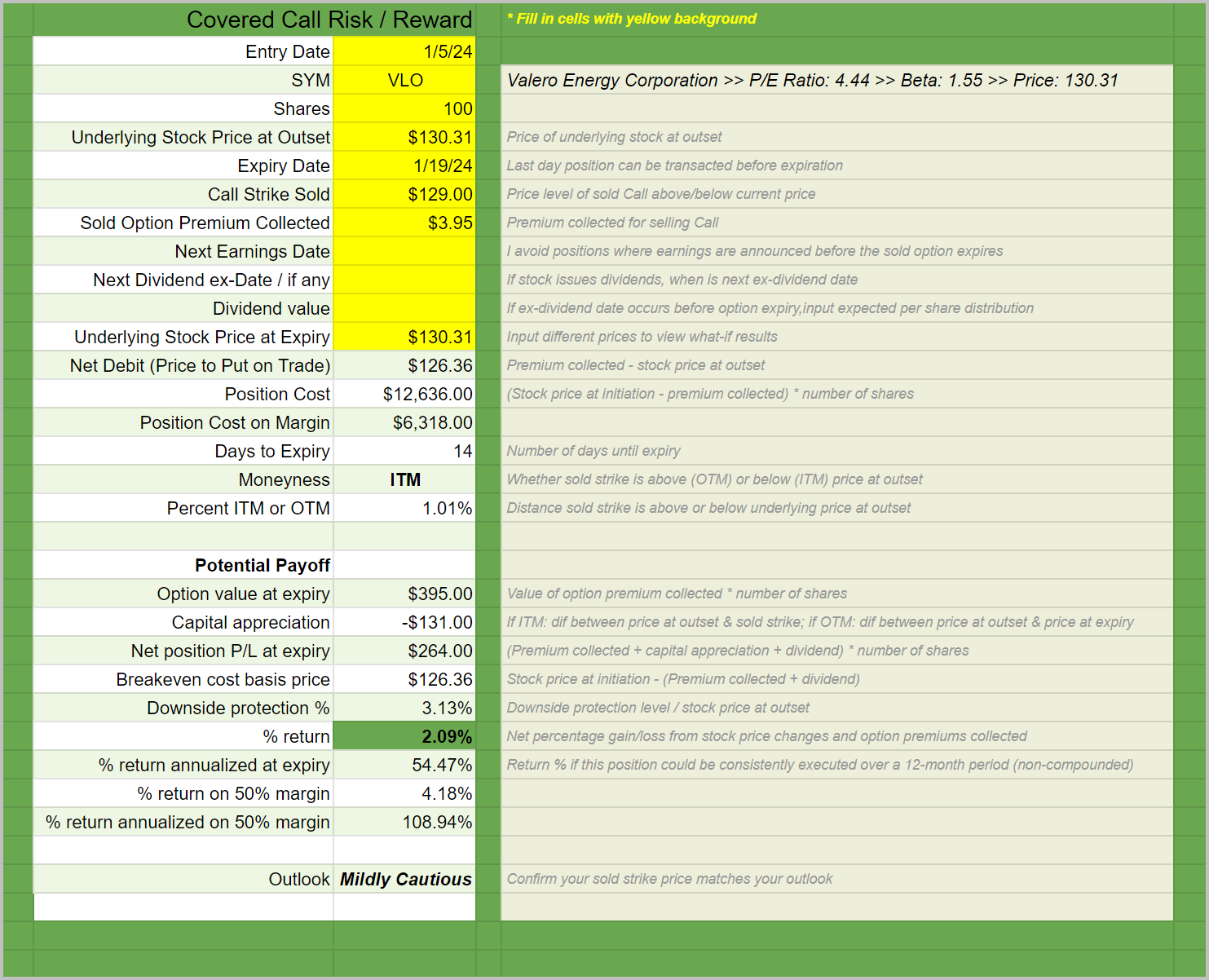
I’m considering a covered call in Valero (VLO) tomorrow where I’d:
Grab shares for about $130.31
Sell the 19 JAN $129 strike call for about $3.95
If filled under these parameters, this mildly cautious position would yield about 2% (54% annualized) in 14 days if VLO is at/above $129 at expiry.
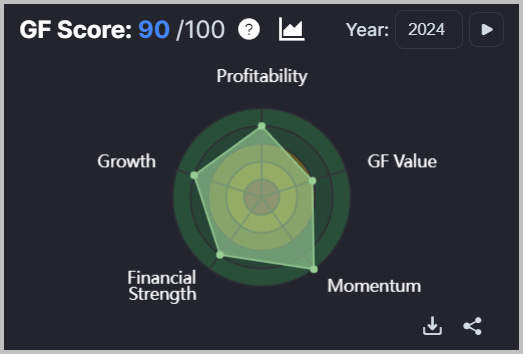
Valero Energy Corporation (VLO) exhibits a robust financial performance, driven by its strategic positioning in the refining and marketing sector. The company has consistently demonstrated resilience amid fluctuating oil prices, emphasizing operational efficiency and cost management. Valero's integrated business model, involving refining, marketing, and logistics, contributes to a diversified revenue stream and financial stability.
Within the competitive landscape, Valero stands as a key player in the downstream segment. The company's extensive refining capacity and geographic diversity provide a competitive edge. However, challenges arise from regulatory pressures and the industry's susceptibility to global economic trends. Valero's adaptability to evolving market trends, including a focus on cleaner fuels and sustainability, aligns with industry shifts and positions it favorably.
SWOT Analysis:
Strengths:
Refining Capacity: Valero's significant refining capacity enhances its market presence and revenue generation.
Geographic Diversity: Operations in diverse regions contribute to resilience and provide access to varied markets.
Weaknesses:
Regulatory Challenges: Adherence to evolving environmental regulations poses challenges, impacting operational costs.
Economic Sensitivity: Valero's financial performance is sensitive to global economic conditions, influencing demand for refined products.
Opportunities:
Renewable Energy Transition: Diversifying into renewable energy sources and biofuels aligns with sustainability trends and presents growth opportunities.
Strategic Partnerships: Collaborations with technology firms or renewable energy companies can facilitate entry into new markets and enhance competitiveness.
Threats:
Volatility in Oil Prices: Fluctuations in oil prices impact Valero's profitability and financial performance.
Market Competition: Intense competition from other refining companies and potential shifts in consumer preferences pose threats to market share.
Take this newsletter on the go with the Substack app.
Use this QR code to download the Substack app on iPhone or Android.

Substack app on Apple App Store
Substack app on Google Play Store
Help
Use the Spreadsheet: Click the link above (orange text)! If you’re reading this email, 80% of any value you can extract from it is stored in the spreadsheet where I update six tabs of stock analysis daily (the rest of the stuff here is just me blathering on about who knows what…) So, click the link and work the spreadsheet to create your own watchlists. You can create your own single-metric analysis score by ranking four metrics from 0 to 5. It’s a great shortcut for finding setups you’re interested in.
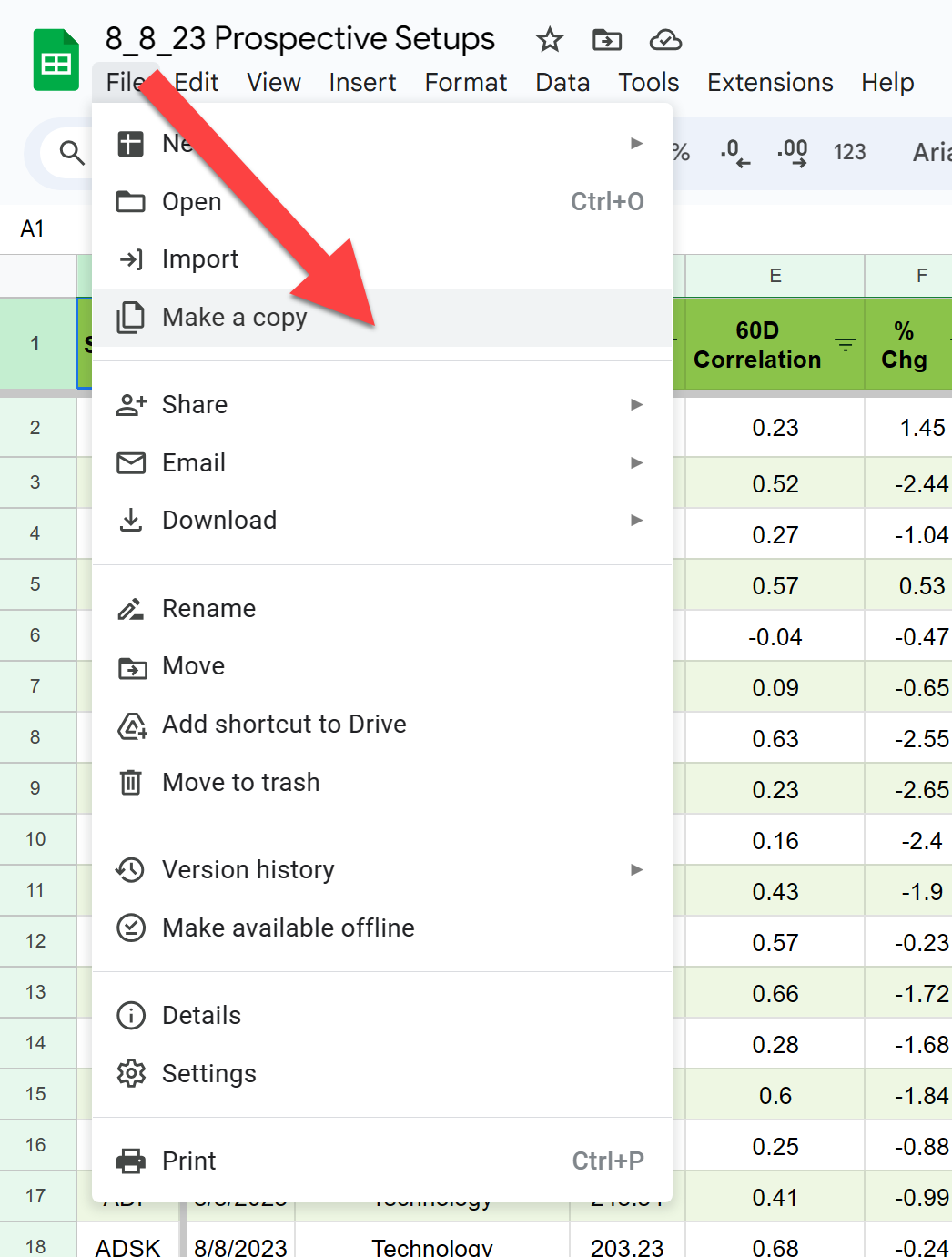
Make a Copy:
Make a copy of the spreadsheet as a reference by choosing “Make a copy” from the File menu (File >> Make a copy). No one else, including me, can view any edits or changes you make. The copy is saved to your Google drive, available to only you.

Reminders on Spreadsheet Columns
Use the Spreadsheet: Click the link. If you’re opening this email, 90% of any value you can extract from it is stored in the spreadsheet where I update six tabs of stock analysis daily. You can create your own single-metric analysis score by ranking four metrics from 0 to 5.
Make a Copy: Make a copy of the spreadsheet as a reference by choosing “Make a copy” from the File menu (File >> Make a copy). No one else, including me, can view any edits or changes you make. The copy is saved to your Google drive, available to only you.
Paired Setups (Bull TTL & Bear TTL): The Paired Setups column is the net number of screens triggering on the current day registering either one or more bullish or bearish mean reversion setups. There are 24 bullish mean reversion setups (the “Bull TTL” column) and 24 bearish (the “Bear TTL column”). The sum of these columns is the Paired Setups column value.
NOTE: these screens were selected from a collection of more than 800 screens. They only measure historic performance and not future projections.
60D Correlation: A 60-day price correlation with the S&P 500 is a measure of how closely the price of a stock has moved with the price of the S&P 500 over the past 60 days. A correlation of 1 means that the two prices have moved perfectly in lockstep, a correlation of 0 means that they have moved completely independently of each other, and a correlation of -1 means that they have moved in opposite directions.
Beta: Beta is a measure of the volatility of a stock's price relative to the overall market. A beta of 1 means that the stock's price moves in the same direction as the market, with the same degree of volatility. A beta of greater than 1 means that the stock's price is more volatile than the market, and a beta of less than 1 means that the stock's price is less volatile than the market.
For example, if a stock has a beta of 1.5, that means that the stock's price is expected to move 1.5 times as much as the market. Stocks with high betas are considered more risky than stocks with low betas as high-beta stocks are more likely to experience large price swings, both up and down.
Investors who are looking for stocks with low risk should consider investing in stocks with low betas. These stocks are less likely to experience large price swings, which may help to protect investors' portfolios from larger losses.
My Summary Score: The last five columns of the tables are for creating your own final ranking score. Just apply a ranking from 0 - 5 on how highly you want to rank a given measure and those individual values will get aggregated into your own personal score in column S.
A higher value means the metric is more important. Then sorting from Z >> A in column S will surface your highest ranked prospects to the top.